Philanthropy in the United States is operating at a historic scale. According to Giving USA, foundation giving has crossed the $100 billion threshold for the third consecutive year, representing approximately 19% of all charitable giving in the U.S.
The resources are there. Your nonprofit’s passion is there. What’s missing is the visibility into which funders are good partners for your cause.
Enter nonprofit grant databases. These digital tools aggregate thousands of funding sources from foundations, corporations, and government agencies into one searchable location. They allow your organization to streamline its research process by filtering results and exploring detailed funder profiles that explain their grant opportunities and past giving history.
To help you harness the power of grant databases for nonprofits, we’ll cover everything from what to look for to the top options on the market. By mastering these tools, you can stop chasing dead ends and start building relationships with funders who are actually aligned with your mission. Let’s dive in and upgrade your search strategy.
Why you should use a grant database for nonprofits
For many nonprofit development teams, searching for funding often consists of fragmented Google searches or scattered spreadsheets to track potential leads. Leveraging a comprehensive nonprofit grant database shifts your fundraising efforts from a manual hunt to an efficient, strategic operation.
Here’s how these tools upgrade your grant-seeking process:
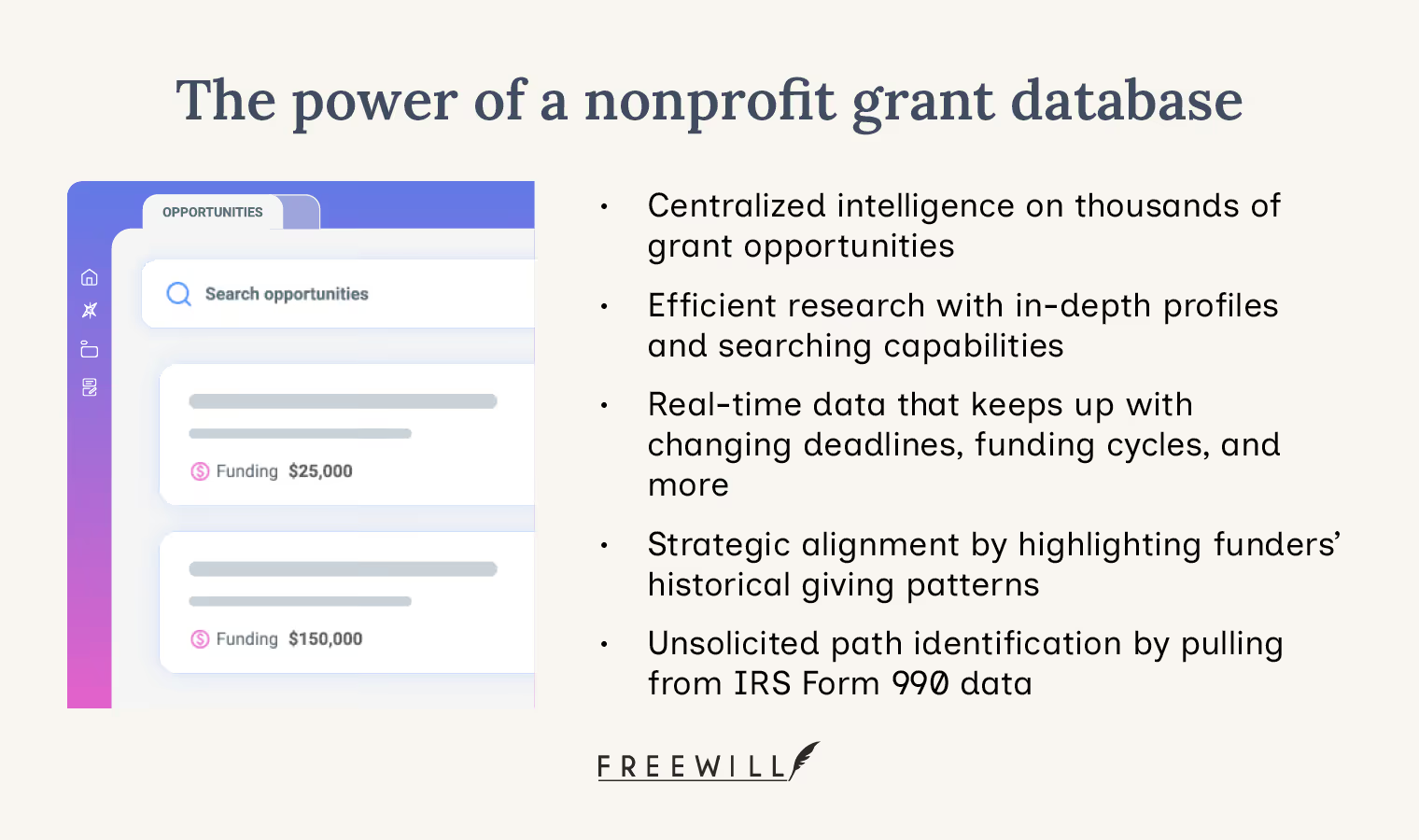
- Centralized intelligence: You won’t need to bounce between dozens of foundation websites or government portals since a database consolidates several opportunities into one searchable dashboard.
- Efficiency at scale: With 85% of nonprofits facing increased service demand but limited staff, organizations like yours don’t have the time to manually vet every funder. Grant databases allow you to automate your first pass at research by filtering out irrelevant leads and focusing your limited energy on higher-probability matches.
- Real-time data accuracy: While static PDFs and word-of-mouth leads are risky, modern databases provide live updates on changing deadlines, new funding cycles, and shifting priorities. This way, your team is always working with current information.
- Strategic alignment: By viewing a funder’s historical giving patterns—such as their average grant size and previous grantees—you can determine if a grant is truly worth your time. Some databases, such as the one powered by FreeWill’s Grant Assistant, offer built-in tools that match you to the best-fit opportunities based on your organization’s specific mission, location, and cause area.
- Unsolicited path identification: Many private family foundations don’t have websites or social media footprints, making them invisible to standard search engines like Google. A database leverages IRS Form 990 data to reveal these funders, opening doors to niche opportunities that other organizations might miss.
These tools act as a force multiplier for your development team, allowing you to validate opportunities faster and with greater confidence. By replacing manual guesswork with data-driven precision, you ensure that every hour of fundraising is well-spent.
What to look for in a modern grant database for nonprofits
Not all databases are built the same. While many platforms claim to have the largest volume of data, the real value for your team lies in how easily you can extract insights from that noise.
When evaluating a potential solution, you’ll need to look for several core capabilities to ensure the tool supports your strategy rather than complicating it. Look for these essential features that define a modern, high-impact grant database for nonprofits like yours:
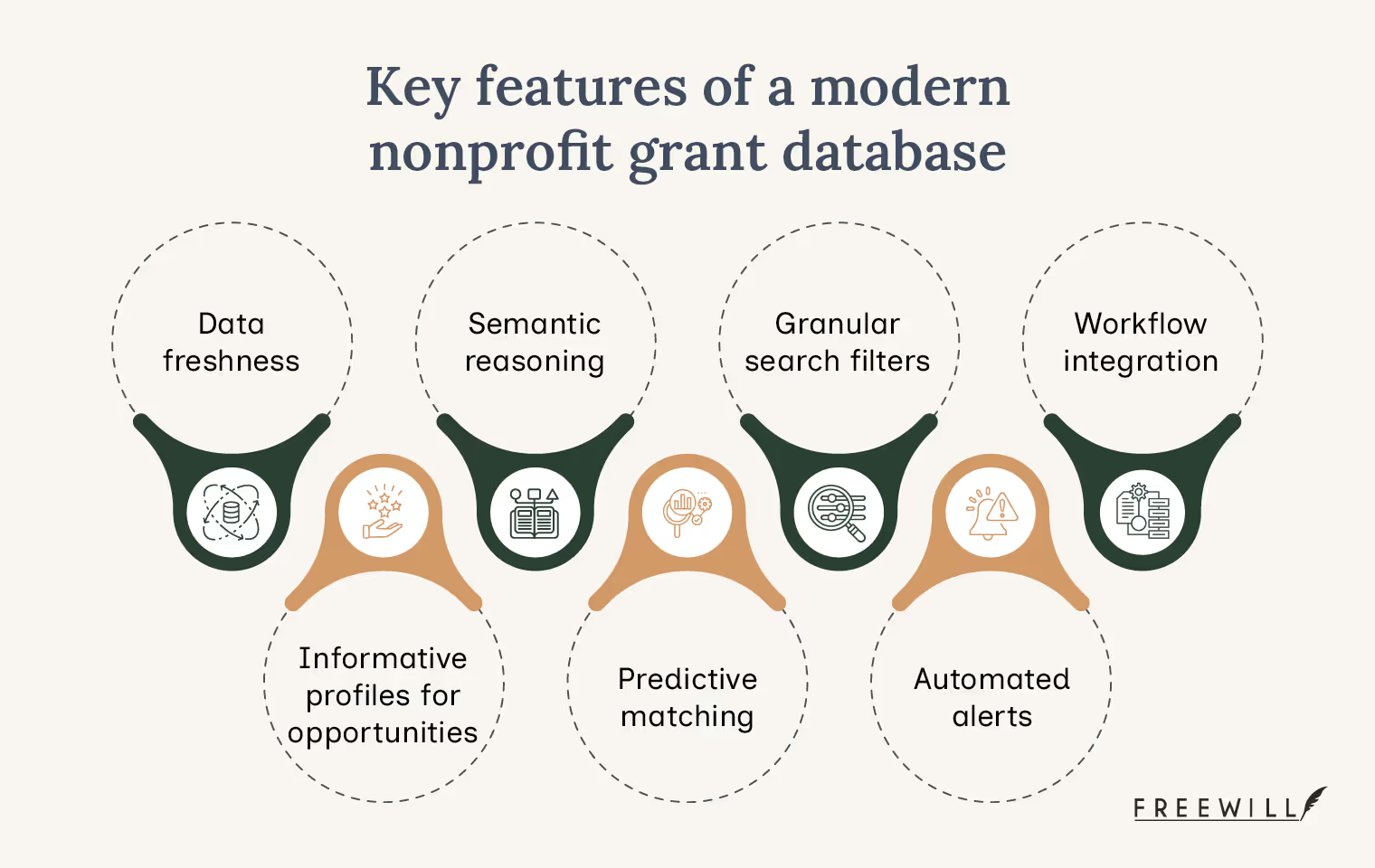
Data freshness
Does the database update frequently, or are you looking at an old, static snapshot? The philanthropic landscape changes constantly, so you need a tool that refreshes deadlines, open cycles, and contact information.
Informative opportunity profiles
To evaluate potential revenue effectively, you need a 360-degree view of the specific grant opportunity on the table. A high-quality profile should include:
- A description: A clear summary of the grant and the funder’s priorities to help you determine value alignment
- Funding amount: The available grant range (e.g., “$10,000–$50,000” or “open”), allowing you to request a realistic amount that won’t get you automatically disqualified
- Eligibility: Explicit requirements—such as 501(c)(3) status or specific exclusions like political organizations—to prevent you from applying where you don’t qualify
- Areas of focus: A breakdown of the specific causes and sub-sectors this particular grant is targeting
- Communities served: Details on the specific geographic regions and population demographics they intend to support with the grant
- Application deadline: Clear due dates for Letters of Inquiry (LOI) and full proposals, ensuring you can build a feasible submission timeline
- Contact information: Updated websites, emails, and phone numbers to facilitate relationship building before you submit
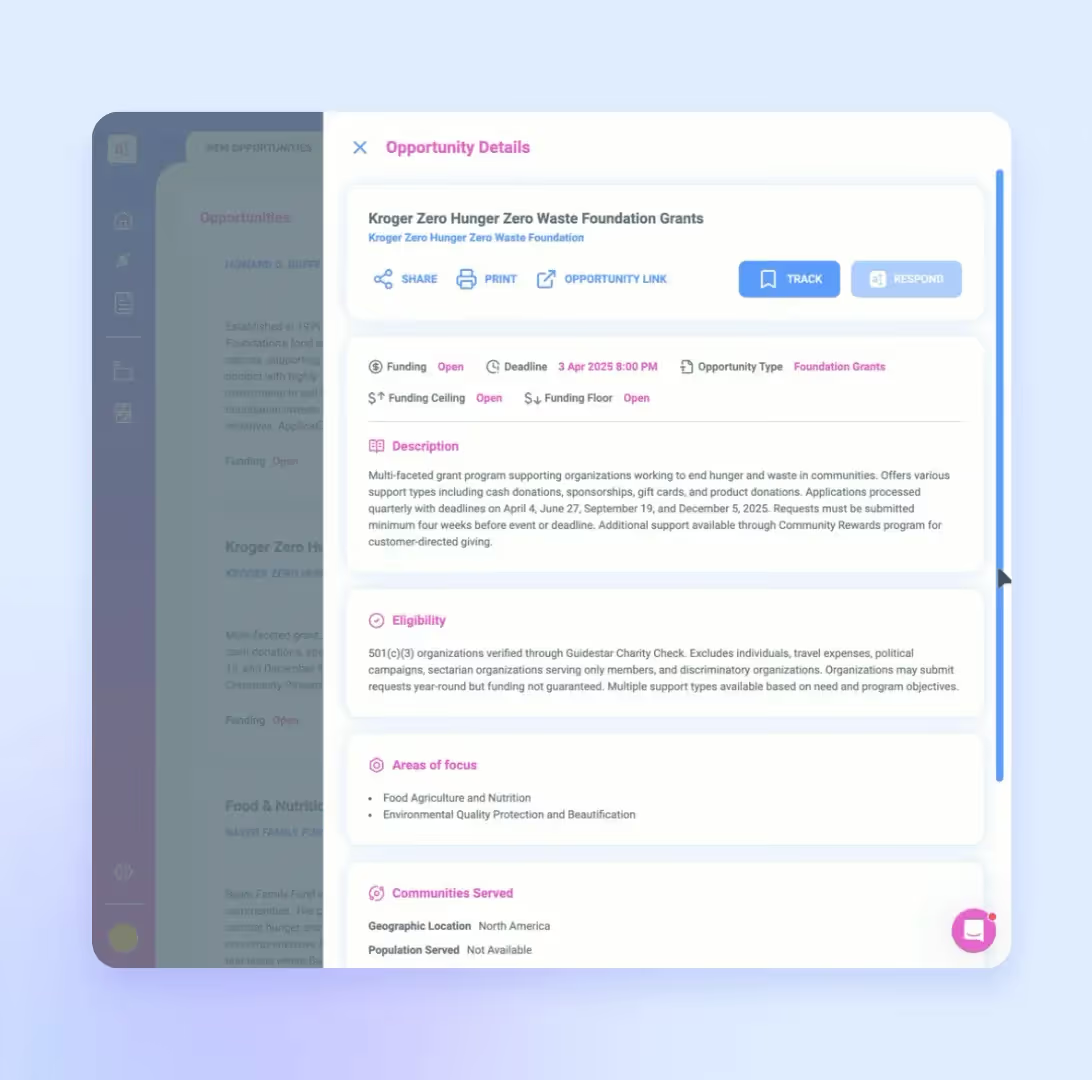
Top-tier databases allow you to interact with this data directly. For example, Grant Assistant offers an intuitive AI chat feature that allows you to ask specific questions about eligibility or priorities without having to comb through dense text yourself.
Semantic reasoning
Do the search tools understand intent, or are they limited to rigid keywords? For instance, a smart database understands that a search for “food security” is also related to “nutrition access” and “hunger relief,” so you don’t miss out on funding by using a slightly different term than the funder.
Predictive matching
Look for a database that ranks opportunities by the best fit for your mission. Sometimes, platforms will actively score and prioritize funders based on your organizational profile. This will save you from wading through pages of irrelevant results to find the best grant opportunities faster.
Granular search filters
The best grant databases for nonprofits make it easy to filter your results by specific factors, drawing on comprehensive funding opportunity profiles. Look for specialized search criteria beyond just keywords, so you’re less likely to waste time on incompatible opportunities. Key filters include:
- Geographic focus so you don’t apply for grants meant for other areas
- Funding type to distinguish between general operating support (unrestricted) vs. project-specific funding
- Grant amount to avoid requesting more than the funder’s average threshold
- Recipient criteria so you don’t write grant proposals for opportunities restricted to organizations that don’t fit your profile
Filters like these are essential for quickly narrowing down thousands of results to the few that actually fit your profile.
Automated alerts
Funding cycles change fast. Choose a system that sends automated notifications for updated deadlines or changes in eligibility requirements. That way, you never miss a critical funding window. These reminders allow you to streamline your entire grant management process, ensuring you are always pursuing the best opportunities at the right time.
Workflow integration
How easily can you move from searching for opportunities to completing your application? Effective tools recognize that finding a grant is only step one. Look for features that allow you to export prospect data directly into your drafting tools (a key strength of Grant Assistant), streamlining the transition from research to writing.
Integrated AI grant writing tools allow you to go from a blank page to a high-quality draft in less time. Grant Assistant Respond, in particular, is trained on 7,000+ winning proposals and learns from your ideas, research, and past winning applications to deliver funder-compliant proposals.
The best grant databases for nonprofits
Now that you understand the essential features you need, it’s time to evaluate the platforms that deliver on those promises. While the market is crowded with legacy platforms, a new generation of tools makes funding discovery faster, smarter, and more precise. Here are the top grant databases for nonprofits to help you create a solid grant management strategy.
The intelligence leader: Grant Assistant Discover
For a tool that moves beyond a static directory and acts as a partner in your fundraising strategy, Grant Assistant Discover is your ideal choice. Built on advanced AI, it’s designed to solve two major challenges in grant seeking: finding the right funding and never missing a deadline.
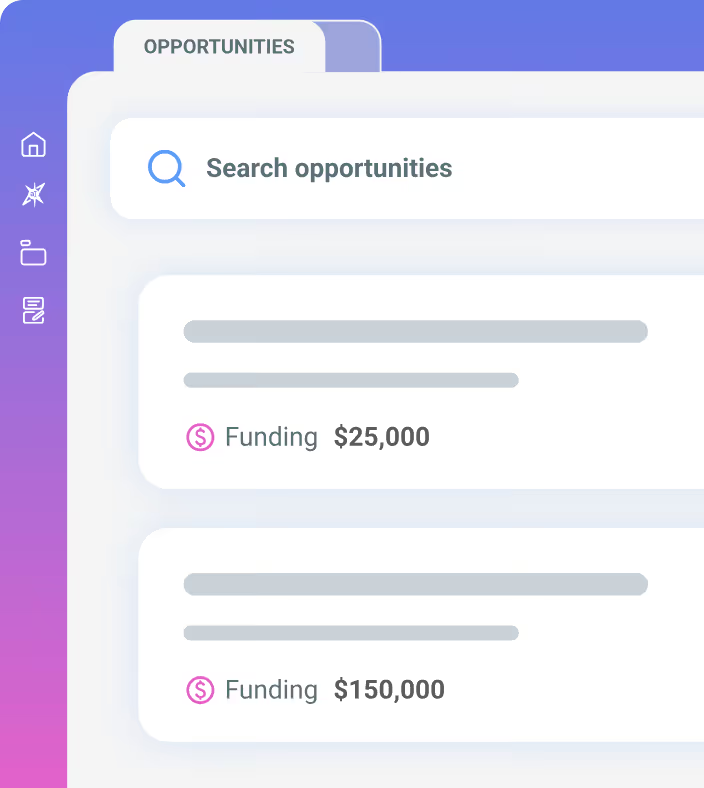
Here is how Grant Assistant Discover upgrades your entire search process:
- Semantic matching: Unlike legacy tools that rely on keyword guessing, Grant Assistant uses AI-powered semantic reasoning to match you with funding opportunities based on the actual context of your work.
- Proprietary fit ranking: The system ranks your matches according to the best fit, allowing you to prioritize the opportunities most likely to result in a win.
- Quick preview and AI insights: Get quick insights on funding opportunities without digging through the full RFP. If you want to investigate a specific grant, you can chat with Grant Assistant’s intuitive AI to go deeper on any of the opportunities found in the database.
- Tracking: You can track any open opportunity and be notified whenever a funder makes changes, such as the eligibility requirements. Easily set unlimited reminders so that you never miss a deadline.
Best of all, Grant Assistant’s capabilities don’t stop there! When you’ve located a grant opportunity you want to pursue, easily use the Respond feature to draft your proposal. It can infuse your organization’s unique tone, explain why your project is the best choice for the funder, and weave in impact data. The result will be a funder-compliant proposal in a fraction of the time. All the while, you can trust that your work and data are protected by enterprise-grade security.
Don’t just take our word for it! Real organizations like yours are finding success with our AI-powered grant database for nonprofits. For example, the Foundation for City College (CCNY) won $500,000 in grants within just one year of using Grant Assistant. Not to mention, they reduced their writing time by an incredible 40%.
"FreeWill and Grant Assistant have helped us find new ways to rethink our current grant writing and fundraising strategies. [Grant Assistant] is a great asset for any institution that wants to stay current, be time efficient, be creative, and look for new ways to tell their story."
Annika Lüdke
Director of Corporate Relations & Foundation Grants, CCNY
Ready to see it in action? Explore Grant Assistant’s full capabilities or book a demo to test the platform yourself.
Other trusted nonprofit grant databases
While Grant Assistant offers a cutting-edge solution, there are other reputable databases that nonprofits often use. Depending on your needs and budget, one of these platforms might also serve as a helpful resource for your team:
- Candid (Foundation Directory): A long-standing, subscription-based database that provides deep historical financial data and profiles on U.S. foundations
- GrantWatch: A subscription-based online directory that aggregates grants from federal, state, and local governments as well as foundations and corporations
- Grants.gov: The official, free centralized portal for finding and applying to U.S. federal government grant opportunities across 900 grant programs from 26 federal agencies
- GrantStation: A membership-based directory that offers access to 15,000+ grant listings and educational resources for grantseekers
- Inside Philanthropy's Grant Finder: A subscription-based, proprietary research tool that offers insider analysis and trends on who is funding what
- Instrumentl: A grant management platform that combines prospecting with tracking tools to help organize the grant lifecycle
- Local and state government websites: Regional portals (like your state’s .gov site) that list specific contracts and grants restricted to organizations in your immediate area
- Grant Gopher: A lightweight, often lower-cost option designed specifically for smaller nonprofits looking for local and community-based funding
- NIH RePORTER: A free searchable database provided by the National Institutes of Health for tracking their funded research and identifying open opportunities in the biomedical and public health sectors
Exploring these additional resources can help you cast a wider net, especially if you have a highly specialized niche like medical research or local government contracting. However, for most nonprofits seeking a streamlined, intelligent path to funding, a modern AI-driven platform like Grant Assistant remains the most efficient choice.
Wrapping up: Start finding the best opportunities
Finding the right funding shouldn’t be a guessing game. By integrating a modern grant database into your workflow, you shift from a scattered search for resources to a targeted strategy for growth.
These tools do the heavy lifting of discovery and qualification, allowing your team to stop chasing dead ends. With the right data at your fingertips, you can ensure your organization never misses the chance to secure its future.
To continue improving your pre-award journey, check out these free resources from the FreeWill blog:
- How to find grants for nonprofits: Helpful tips and sources
- Top 10+ grant writing software picks and supplemental tools
- Can you use AI for grant writing? What you need to know