Holding more than $326 billion earmarked specifically for charity, Donor-Advised Funds (DAFs) have become one of the fastest-growing giving vehicles in American philanthropy. Yet, despite this massive surge in popularity, our latest research reveals a surprising trend: most nonprofits are experiencing DAF growth entirely by accident.
For our 2026 DAF Report, we looked at both sides of the DAF relationship: the donors who give through these funds and the nonprofits that receive them. What we found was a fascinating divide between sector assumptions and donor reality. Too many organizations are holding back because they fear anonymous gifts or believe they shouldn't explicitly ask for DAF allocations.
By understanding exactly how, when, and why DAF donors give, nonprofits like yours can build intentional strategies that unlock this revenue stream.
Donor-Advised Fund FAQ
If you’re looking to build or refine your non-cash giving strategy, it helps to understand the mechanics and realities of DAFs. Here are answers to some of the most common questions we hear, backed by our 2026 research.
What is a Donor-Advised Fund?
A DAF is a specialized, invested financial account used exclusively for charitable giving. Donors make an irrevocable contribution to the fund, receive an immediate tax deduction, and can then recommend grants to eligible 501(c)(3) charities over time. Because dollars placed in a DAF are invested, the funds can grow tax-free to support charitable missions over the long term.
Who decides where the DAF grants go—the donor or their financial advisor?
The decision belongs to the donor. Even though 83% of donors hold their DAF at a national provider like Fidelity, Schwab, or Vanguard, none of the donors in our survey said a financial advisor or estate planner shaped which organizations they support. What drives their contributions is personal preference, with 80% saying a personal connection to the organization influences their choices.
Are most DAF gifts anonymous?
No. While 20% of nonprofits name anonymous DAF gifts as a top challenge, the fear is much bigger than the reality. Our research shows that 81% of donors identify themselves when they give, with 54% doing so always. Only 10% of DAF donors choose to give anonymously, primarily to keep their giving private.
The accidental growth of DAFs
DAF giving is an exploding channel reshaping how donors support the causes they care about. This growth is fueled by significant increases in both the sheer volume of DAFs and the amount of money flowing through them.
The numbers point to a massive pool of charitable dollars just waiting to be activated:
- There are currently nearly 3.6 million DAF accounts nationwide.
- These accounts hold more than $326 billion specifically set aside for charity.
- In 2024, donors contributed a record $90.6 billion into their funds and granted an all-time high of $64.6 billion back out to nonprofits.
- DAFs now make up an estimated 12% to 13% of all charitable giving in the U.S. and nearly a fifth of individual giving.
Nonprofits are feeling this momentum directly:
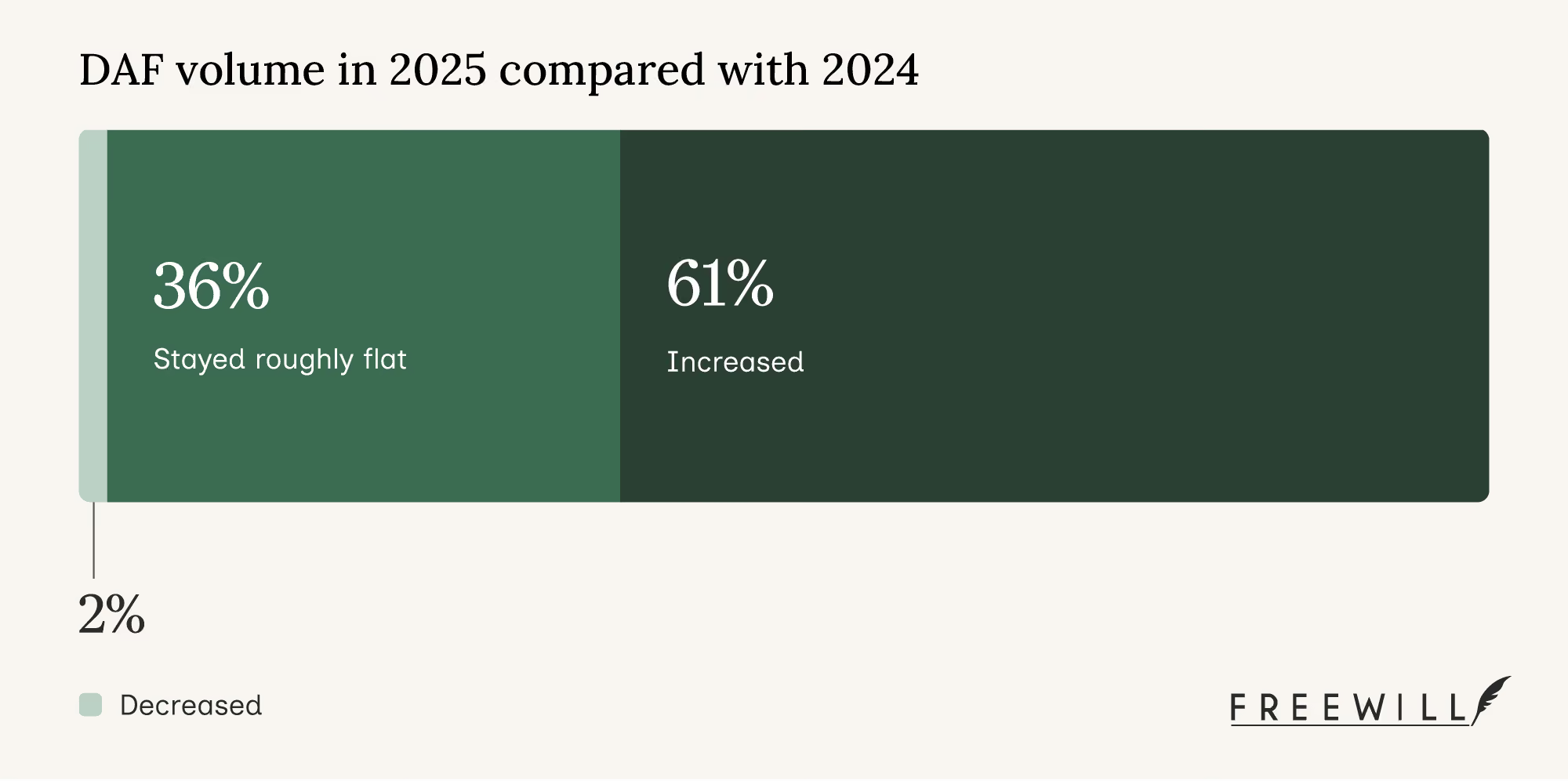
- 61% of nonprofits took in more DAF dollars in 2025 than in 2024, and almost none (2%) saw a decline.
- 79% of organizations report receiving DAFs, making them the most common non-cash gift, pulling ahead of QCDs (64%) and gifts of stock (46%).
- Over 25% of nonprofits now receive fifty or more DAF gifts a year, with fundraisers noting these gifts are often larger than typical cash donations.
However, when we asked nonprofits why they were having a successful DAF year, the answers revealed a startling truth: growth is happening on its own. Fundraisers repeatedly described DAF revenue rising without really trying.
Internal roadblocks costing you DAF revenue
If organizations are growing without trying, imagine what’s possible with genuine intention. Our research uncovered that many fundraising teams are leaving money on the table due to four specific gaps between what they believe about donors and how donors actually behave:
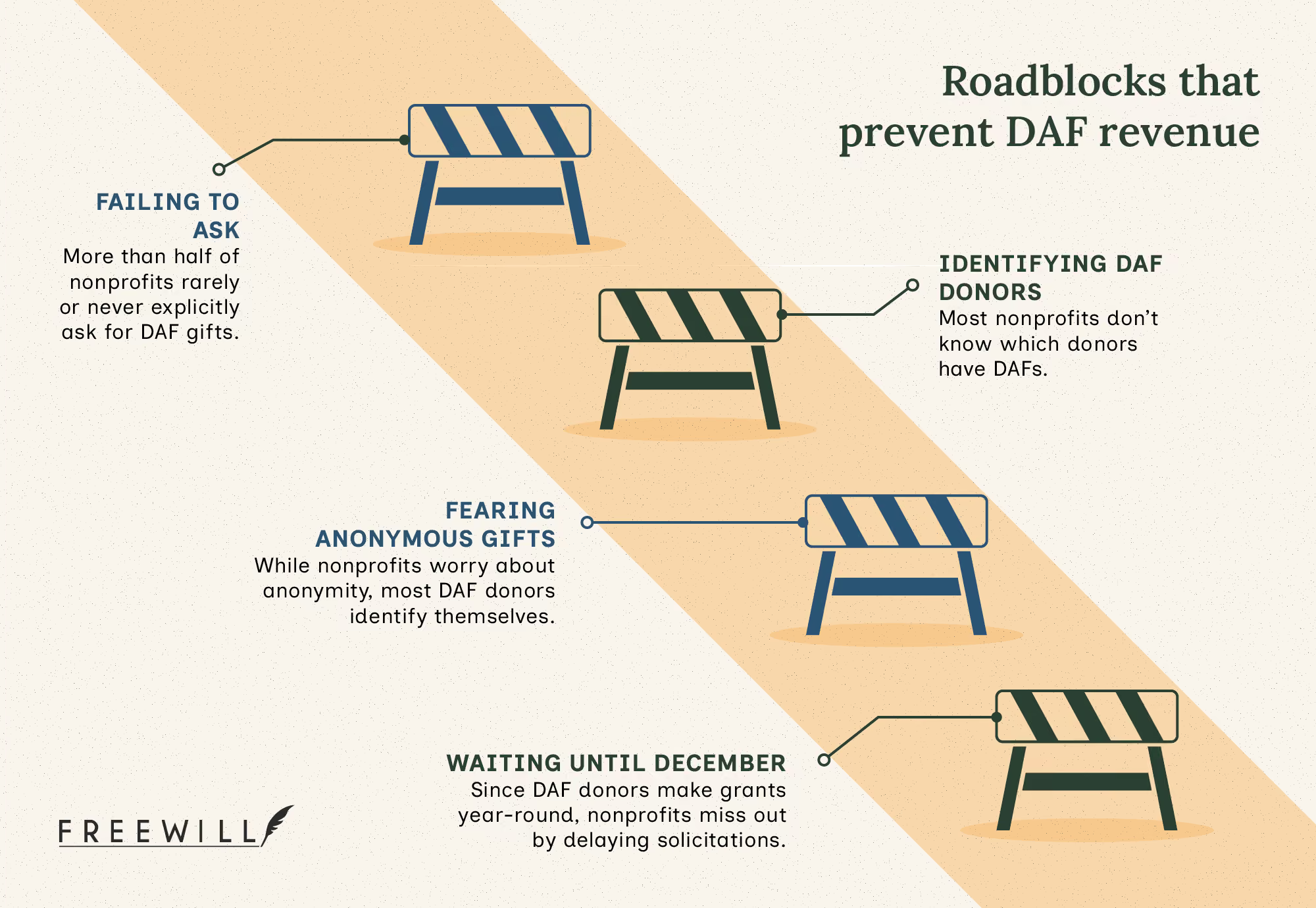
- Failing to ask: Nonprofits assume asking for a DAF gift is pushy, leading 52% of organizations to rarely or never explicitly ask for one. However, nearly half (49%) of DAF donors say a nonprofit's ask actually influenced a grant they made.
- Identifying DAF donors: 72% of nonprofits say their biggest challenge is simply not knowing which of their donors has a DAF. Yet only 33% currently flag past DAF donors in their CRMs.
- Fearing the unknown: Organizations worry about faceless gifts, but 81% of DAF donors identify themselves at least sometimes. Your donors want to be known and thanked.
- Waiting until December: Only 33% of nonprofits say their DAF gifts arrive evenly across the year, with most waiting for year-end campaigns. But with most donors granting year-round, an ask in March is just as crucial as one in December.
If your DAF strategy feels like an afterthought, you’re likely missing out on revenue. By aligning your fundraising efforts with how DAF donors actually behave, your organization can stop leaving money on the table and start capturing these missed opportunities.
How to move the needle: DAF strategies that work
The data provides a very clear, encouraging roadmap: DAF revenue growth is largely within your control. Nonprofits are finding success by making the opportunity known through both one-on-one personal engagement and broader educational marketing:
Reach out directly to donors.
We sorted nonprofits by how often they ask donors to give through a DAF. Every step up in direct solicitation resulted in a step up in growth:
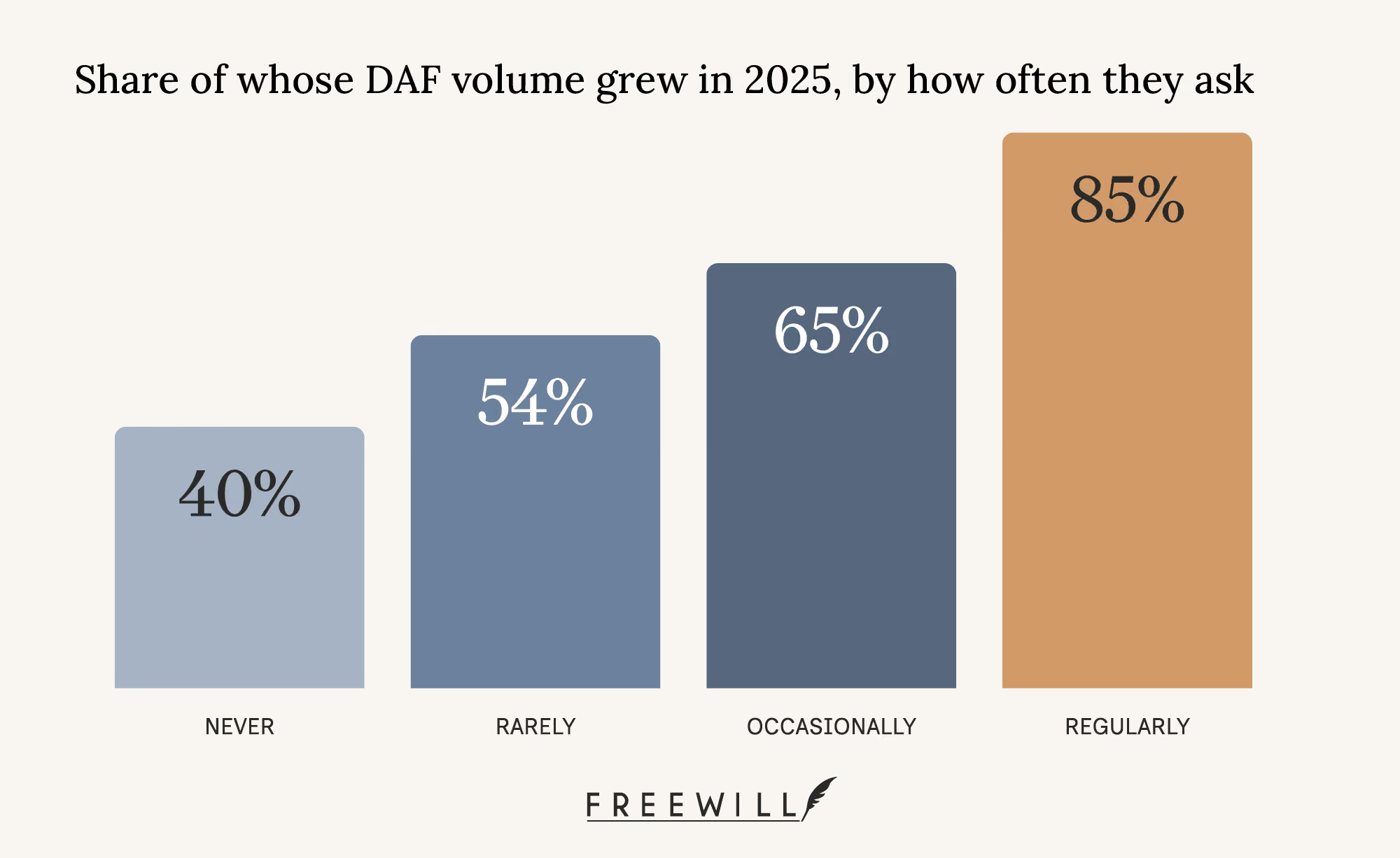
- Never ask: 40% saw DAF volume grow.
- Ask rarely: 54% saw DAF volume grow.
- Occasionally: 65% saw DAF volume grow.
- Ask regularly: 85% saw DAF volume grow.
Based on this, start talking about DAFs during donor meetings, making personal phone calls, or bringing them up in other individual cultivation conversations.
Build momentum through promotion.
While direct outreach works, you’ll also want to grow awareness among your entire supporter community. Think along the lines of posting on your nonprofit website, featuring a DAF donor story in your newsletter, posting on social media, or mentioning DAFs in general appeals.
Of the organizations that actively promote DAFs, 74% saw volume growth in 2025. And layering tactics works: less than half (42%) of organizations using no promotional tactics reported growth in 2025, while 75% of nonprofits using three or more promotional tactics experienced an increase in DAF gifts year-over-year.
However, a word of caution: passive tactics (like simply throwing a button on a website) rarely do much on their own. Be intentional.
FreeWill’s role in DAF giving
Once you capture donor interest, your nonprofit needs the right infrastructure to make the giving process seamless. This is where specialized technology comes in. FreeWill’s Smart Giving Suite is designed to help nonprofits easily solicit and accept high-value assets like grants from Donor-Advised Funds.
By integrating with DAFpay (created by Chariot), FreeWill empowers your supporters to make DAF grants directly on your website in a few clicks. This frictionless experience keeps donors on your site rather than redirecting them to third-party portals, significantly increasing the likelihood that they complete their gift.
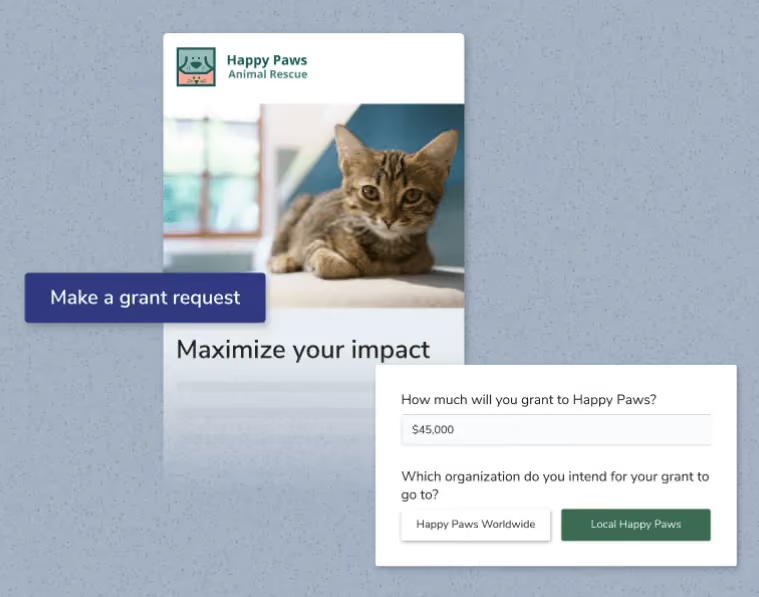
When you invest in FreeWill, your nonprofit can:
- Shorten the process by empowering donors to give directly from their accounts with leading DAF providers.
- Eliminate anonymous gifts by receiving full visibility into donation data.
- Leverage gift details to follow up and steward your DAF donors.
Curious how real nonprofits are succeeding with FreeWill? Hear how NOCO Humane has boosted non-cash gifts like DAFs with our platform:
Ready to discover how your nonprofit can replicate that success and educate your donors? Reach out to our team to learn more.

Wrapping up
Our report uncovers a highly encouraging reality: DAF revenue is growing, these donors are incredibly reachable, and the two most important levers (identifying and asking) are entirely in your hands. By making DAFs a year-round priority, your nonprofit can unlock transformational giving.
To learn more about tax-advantaged giving, explore these resources:
- The rise of QCD fundraising: Takeaways from our report
- DAFs 101: Introduction and how-to guide for nonprofits
- How to accept stock donations: Easy steps for nonprofits