


Why are major donors so important for nonprofits?
Imagine for a moment that your organization has 1,000 supporters. And 120 of those supporters are responsible for 90% of your fundraising revenue. You’d probably want to build strong relationships with those 120 people, right? After all, their support has an outsized impact on your ability to pursue your mission, serve constituents, and pay your staff.
You might be thinking that’s a dramatic example, but it’s the reality. Many nonprofits see their donation patterns adhere to the “Pareto principle” or “80/20 rule,” which says that 80% of donation dollars come from just 20% of an organization’s donors. Some sectors see a very similar breakdown (and others see something closer to a 90/10 ratio), but for all organizations that rely on donated support, the concept is crucial.
Simply put, this small group of donors is wealthy, wants to make an impact, and has the capacity to make major gifts. And for many major donors, their giving capacities have grown significantly in recent years.
As every nonprofit grows, it should understand major giving and take steps to establish development practices tailored to its unique needs. But how? In this guide, we’ll cover everything you need to know to take successful first steps into major giving.

What is major giving?
Major gifts are the largest donations that a nonprofit receives from individual donors. These donations are often used to fund specific projects, meet fundraising goals, or support general operations.
Major gifts can be made with cash, but they’re more commonly given as more complex non-cash gifts (more about these below). Some planned gifts like bequests can also be quite large and serve as major gifts even if they aren’t explicitly solicited as such.
To pursue major gifts, nonprofits develop dedicated programs. A major giving program focuses on building relationships with a portfolio of prospects who have the capacity and affinity to make a major gift.
Any nonprofit can start a major gifts program — no fixed amount determines what a major gift is to any one organization. It boils down to the impact of the gift on a nonprofit’s needs. Some consider gifts over $100,000 to be major, while smaller nonprofits may consider $1,000 to be a major contribution.
Who are major donors?
Since a major gift might look different for every nonprofit, “major donors” as a group can be quite diverse. However, they do share a few common characteristics, namely the capacity and affinity to give large donations.
- Giving capacity refers to a donor’s ability to give a major gift, often signaled by markers like high net worth, notable professional titles, and real estate and stock ownership.
- Giving affinity refers to a donor’s philanthropic inclinations in general and towards your nonprofit’s mission specifically, marked by previous involvement with your or similar organizations, board service, and personal connection to the cause.
Wealthy older donors are usually the best major gift prospects, but soon Millennials will be, too, as this group acquires more wealth and giving capacity grows. Nonprofits identify prospects among their donors and broader communities using prospect research strategies.
What is a major gifts officer?
A major gifts officer (MGO) works in a nonprofit’s major giving program. They find, cultivate, solicit, and steward potential major donors in their portfolio of prospects. Depending on the size of the organization, an MGO may be part of a team of gift officers or work independently.
How to create a major gifts strategy for your nonprofit
An overarching major gifts strategy will guide your nonprofit’s efforts and give your program structure. If you’re starting from scratch, what are the first steps and considerations to keep in mind?
How to set major gift thresholds at your organization
To start pursuing major gifts strategically, you need to define what they mean for your organization. Here’s a quick way to determine what could be a major gift for your nonprofit:
- Identify the 25 largest gifts made to your organization in the past five years.
- Examine the range of those gift sizes and eliminate any outliers.
- Accounting for the remaining gifts, estimate a major gift minimum by figuring out the median of this range. This will help you capture the largest number of valuable prospects. For example, if your range is $5,000 to $10,000, you could go with $7,500.
Make sure you do not set the major gift amount bar too high. If you are seeking major gifts, your donor base needs to be capable of reaching that amount. Similarly, if you find that many donors can give that amount, you may need to raise it.
Thankfully, your major gift criteria never need to be set in stone—you can (and should) refine them as your program evolves and you learn more about your top donors’ and prospects’ giving habits.
Developing your strategy
To develop the rest of your major giving strategy, consider the major giving lifecycle:

- Identification: Prospects with the capacity and affinity for major giving are identified through prospect research.
- Cultivation: Your nonprofit reaches out to prospects personally to build relationships, explain your needs, and introduce your major giving program.
- Solicitation: A major gift officer formally asks for a major gift after previously discussing it with a prospect during the cultivation process.
- Stewardship. Your nonprofit stays in touch with the donor to maintain and grow the relationship, updating them on your nonprofit’s progress, encouraging future engagement, and even requesting future gifts.
An effective major gifts strategy should account for all of these crucial stages in the fundraising process.
For each stage, think about the tools and frameworks you’ll need to empower your gift officers, like prospect research resources, a constituent relationship management (CRM) system equipped with moves management features, and customized outreach collateral for solicitations and stewardship. Ask yourself:
- What are the specific goals and benchmarks you can set for each stage of the pipeline?
- What will define success for your prospect identification efforts?
- How many of those prospects will you aim to encourage through each stage of the process?
Additionally, consider your staff’s time. Major giving is a time-intensive process, requiring one-on-one communication and relationship building. However, the size of major gifts means that this is usually a high-return investment of your time. Do you have a gift officer or fundraiser with the capacity to take on major giving? If not, can you shuffle and delegate responsibilities to free up time for your gift officer?
Understanding the types of major gifts
Let’s take a closer look at major gifts—what forms do they typically take? While some donors will want or be able to give a large gift of cash immediately via check or through pledged installments, others may prefer other ways to give.
Understanding how different giving methods work will allow you to meet your major giving prospects where they are, speak knowledgeably, and offer flexible options.
The two most important types of major gifts
For major giving, there are two key types of non-cash gifts to focus on: gifts of stock and real estate.
These gifts are uniquely valuable for nonprofits because they have the biggest impact on fundraising growth. Organizations that accept non-cash gifts see 50% growth over the next five years versus those that accept only cash donations. That’s often because donors who give these gifts often end up giving more than they would if they gave cash.
Why? 97% to 99% of all wealth in the United States is held in assets like stocks and real estate—not cash—so donors are able to give more with these gifts. And since these assets are not part of a donor’s liquid, day-to-day money, they can be an easier ask because the donation will not affect their immediate spending power.
Plus, donors receive more significant tax benefits than with cash donations. Only 10% of people itemize charitable deductions on their tax returns. Donating assets like stock is one of the only ways for 90% of taxpayers to see tax savings from charitable gifts.
Let's break down what these gifts are and why they're a win-win for both donors and nonprofits.
Major gifts of stock
Gifts of stock can include publicly-traded stocks like Microsoft or Apple, as well as gifts of mutual funds, Treasury bills and notes, corporate and municipal bonds, and stock in privately held companies. Since 58% of American households own stock and markets have seen record highs in recent years, now is the time to get smart on these gifts.

When donating stock, donors don’t pay capital gains tax, which is a tax on the current value of a stock minus the purchase price. For example, let’s say Apple stock is currently worth $185. If an individual purchased a share five years ago at $38, their cost basis is $38 and their capital gain would be $147.
And if they itemize deductions, donors can also receive an income tax deduction for the current value of their donated shares. Donors generally transfer these tax savings onto the nonprofit, making them frequently larger than cash gifts.
Out of hundreds of nonprofits we surveyed for our series of reports on stock gifts, the average value of a stock donation in 2020 was more than $8,000. For many nonprofits, this would be considered a major gift.
Major gifts of real estate
Real estate gifts include undeveloped land and residential or commercial properties. Similar to stock gifts, individuals with real estate held for longer than a year can receive an income tax deduction on the current value of the donated property. They also avoid capital gains tax on the equity gained for appreciated properties.
And these assets have the biggest impact of all non-cash gift types. According to a study by charitable giving expert Dr. Russell James, when the share of gifts of real estate grows by more than 10% at any nonprofit, the value of total contribution dollars grows by more than 26% in the same year.
Other tax-savvy major gifts to understand
The world of non-cash giving is diverse—aside from stock and real estate, there are tons of other flexible giving options.
When guiding your major gift prospects on which type of vehicle is right for them, you can include QCDs, DAFs, and cryptocurrency as options that help them save on their taxes and make a larger impact on your organization. Let’s take a closer look at these types of gifts.
Qualified Charitable Distributions
Qualified Charitable Distributions (QCDs) are tax-free gifts made from a traditional IRA. Over the last few years, the number of QCDs that nonprofits receive annually has nearly tripled. Between 2019 and 2021, there was a 390% increase in the number of QCDs given to nonprofits!
More and more wealthy older donors are giving these gifts from their IRAs for two key reasons. If they don’t need the extra funds, they can still use them to meet their Required Minimum Distributions (RMDs)—the amount they're required to withdraw from their IRA each year after turning 72. And, since they won’t be taking these RMDs as income, QCDs help them reduce their income taxes.
They can be a key part of your major gifts program, as QCD donors tend to become recurring givers, making large gifts and using them to meet their RMDs each year.
Donor Advised Funds
Donor Advised Funds (DAFs) allow donors to make a charitable contribution to a private fund administered by a third party, such as Schwab or Fidelity Charitable. The donor receives an immediate tax deduction for the entire amount and then recommends grants from the fund over time to qualifying nonprofits.
One of the reasons these are growing in popularity is because the standard minimum deduction increased in 2018. Now, it’s more tax-beneficial for some donors to give a large lump sum in one year and then spread out their charitable giving via DAF grants over the following years.
Because the money is added in large lump sums, DAFs hold a lot of wealth. Contributions to DAFs reached a record high of $90.6 billion in 2024, with nearly 3.6 million DAF accounts nationwide holding more than $326 billion set aside for charity. Nonprofits continue to see strong growth from this vehicle, with donors granting an all-time high of $64.6 billion to charities in 2024 (an 18% jump over the prior year), and 61% of nonprofits reporting that their DAF revenue grew even further in 2025.
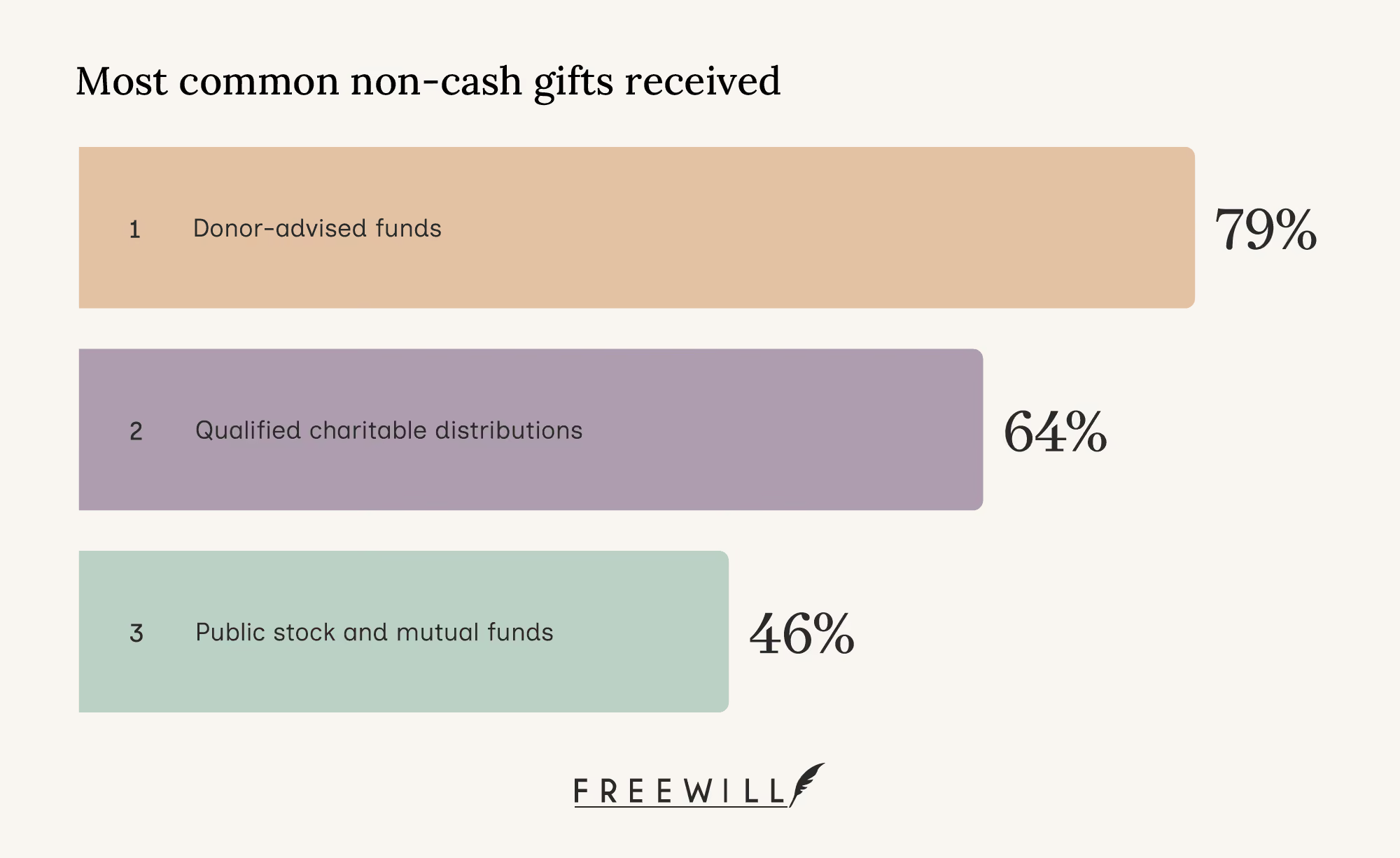
Further, nonprofits report that DAFs were the most common non-cash gift they received, ranking above QCDs as well as public stock and mutual funds (The 2026 FreeWill DAF Report).
Cryptocurrency
An increasingly popular gift type, cryptocurrency (or crypto) is a cross between a currency and a digital asset. Like a currency, people can use it to buy goods and services. Like a digital asset, they can also invest in it for long-term gains. You may be familiar with the most popular cryptocurrencies, Bitcoin and Ethereum, but there are more than 16,000 different cryptocurrencies in circulation right now.
Why are these likely to be major gifts? There is a lot of wealth held in crypto. The total value of all currencies is more than $1.92 trillion, and they’re exploding in popularity, with people who bought early seeing huge gains. Plus, your wealthy prospects are likely to own some form of crypto—71% of those with an income of more than $1 million do.

Like other appreciated assets, cryptocurrencies have capital gains taxes. Donors can avoid these taxes by donating them, passing on these tax savings to the nonprofit. With more people purchasing cryptocurrencies, you may want to start thinking about how your organization will handle crypto gifts moving forward.
3 essential strategies for major gift fundraising
As your major giving program grows and evolves, what are the essential strategies to keep in mind that will help you tap into the powerful benefits described above?
1. Build personal relationships with major donor prospects.
The primary way to secure major gifts is by building strong relationships with potential donors so they have a vested interest in your organization and mission. This process is called donor cultivation.
The average cultivation process for a major gift can take six months or longer. Here are a few strategies that will help you establish a personal relationship with your potential donors:
- Learn more about what motivates them to support your cause through one-on-one meetings
- Invite prospects to volunteer or advocate for your mission
- Host smaller, exclusive events (like luncheons, galas, or tours of your facilities)
- Include texting in your donor outreach (this is especially effective for Millennial donors, as text messages have a nearly 100% open rate)
Keep track of your interactions with prospects in your donor CRM. This will help you tailor your outreach and communications with programs or initiatives that best align with your prospects’ interests. Knowing and referring back to these details will help donors feel more connected to your mission.
2. Make it easy to give complex non-cash gifts.
You can get larger gifts from existing donors by making it easy and accessible for your donors to give in other ways than cash.
The easiest change you can make is to provide non-cash donation options on your Ways to Give page. Leave out the tax jargon and focus more on impact. For example, include language like: “You can save up to 70% on taxes and make a bigger impact on our mission with a gift of stock.”
Reasons to Believe is a great example of this concept done well. On their “ways to give” page, they list various giving vehicles before donors even select the amount they’d like to give.

From there, they link out to separate web pages that provide more information about different vehicles, like this one about stock gifts.

When a donor clicks the link that says “Give stock online,” it takes them to a page where they can choose when and how they’d like to donate stock. (This page for Reasons to Believe is their custom FreeWill Stock Tool landing page.)

Before a donor can make a gift of stock, they enter their contact information, gift size, stock ticker number, and which financial custodian they’re using. Include a similar form on your site for any non-cash giving vehicles. This is critical—we’ve found that 47% of nonprofits receive checks without donor information attached.
After a donor completes the form, you can send them an email, PDF, or another page with the instructions for the giving vehicle they’ve chosen. For stock gifts, you’ll also want to include your brokerage account and Depository Trust Company (DTC) information to complete a transfer.
These processes will help you track gifts, acknowledge your donors, follow up on in-progress gifts, and steward donors for gifts in the future.
3. Educate all of your donors about non-cash giving.
Many of your donors want to make a larger impact but aren’t aware of the tax-savvy giving options that will allow them to do so. Educating all of your supporters with consistent marketing is the best strategy for securing non-cash gifts and reaching more potential major donors.
Repetition is key—traditional marketing rules state that consumers need to hear a message seven times before they purchase.
When an organization sent educational information about stocks to their supporters at least twice in 2020, they were over 1.5 times more likely to get gifts than those that didn’t market at all. However, many nonprofits have a problem with getting educational information into packed marketing calendars.
One way to solve this is by including non-cash giving options in all of your fundraising appeals by presenting it as one of several, smarter ways to give. You can do this in a regular fundraising email, a newsletter, or as a postscript. Link to a web page that includes more information, or give them ways to learn more and speak to a gift officer. Many nonprofits centralize these digital assets in dedicated microsites, often called Planned Giving Websites.
Next steps: Stewarding donors after securing a major gift
Donor stewardship is the relationship-building process that occurs after a donor makes a gift. It usually includes thanking them and recognizing the impact that they’ve made (hopefully inspiring them to give again).
Major donors tend to become repeat donors, so it’s important to make them feel appreciated to bring in more gifts in the future. Do this by acknowledging the impact your major givers are having on your organization and mission.
First, you’ll want to put a stewardship plan in place. This plan should outline communication opportunities and strategies for keeping donors engaged. Some ideas include:
- Updating donors on the impact of their gifts, especially if their dollars funded a specific project
- Sending thank yous occasionally throughout the year, even when they haven’t donated recently
- Continuing to invite them to volunteer or to join exclusive events
Building donor relationships is key to major giving. With the right strategies in place, you can inspire donors to make larger, tax-savvy gifts that are a win-win for them and your organization.
The key to success in major giving today is flexibility. By understanding major giving and developing a strategy tailored to your organization’s unique donor base, you can kickstart a transformational program for your mission.
Study up on the flexible non-cash giving options that wealthy donors increasingly prefer. Invest in tools that make it easier for you to promote and then accept these gifts.
FreeWill’s Smart Giving Suite offers everything you need to unlock growth for your organization with modern forms of giving. Tap into changing philanthropic habits across all stages of life with innovative tools for fundraising DAFs, stocks and securities, QCDs, and crypto. By making the process easy for donors, you make it easier on your team, too.
Reach out today to learn more about how FreeWill can help and to try our tools for yourself. We also encourage you to keep learning about modern major gift fundraising with these additional resources:
- 6 steps to creating a successful major gifts program at your nonprofit
- How to accept stock donations: Easy steps for nonprofits
- Decoding DAFs for nonprofits: Insights from our 2026 report
- Future-proof giving: Securing gifts from younger donors in 2023
- What nonprofits need to know about the 6 stages of the fundraising cycle



.avif)