Often, fundraisers assume that once a supporter adds a nonprofit to their will, the relationship has reached its peak. But in reality, securing a charitable bequest marks the beginning of a donor’s most committed years. These supporters are looking to deepen their investment in your mission.
The Great Wealth Transfer is predicted to shift roughly $124 trillion from Baby Boomers to younger generations over the next 25 years, meaning that the way your nonprofit presents planned giving opportunities matters. Traditional paper brochures are no longer the only—or even the best—way to reach supporters. To capture the attention of younger audiences and tech-savvy donors, you need to view brochures as one piece of a larger marketing puzzle.
In this guide, we explore how to transition from traditional static outreach to digital tools that drive results, covering the following:
- What are planned giving brochures?
- Why traditional planned giving brochures are evolving
- How to build a planned giving microsite that drives conversions
- Strategies for modern planned giving marketing
- Planned giving outreach FAQ
- Scale your legacy program with FreeWill

What are planned giving brochures?
Planned giving brochures are educational resources that explain how supporters can make long-term legacy gifts, such as bequests, to a nonprofit. While these were once strictly print resources, digital brochures can now be integrated into modern marketing strategies alongside interactive microsites and online estate planning tools.
These resources spread awareness of and simplify the process of leaving a gift in a will, showing donors that they don't have to be wealthy to leave a lasting mark on the world. Typically, planned giving brochures include the following key elements:
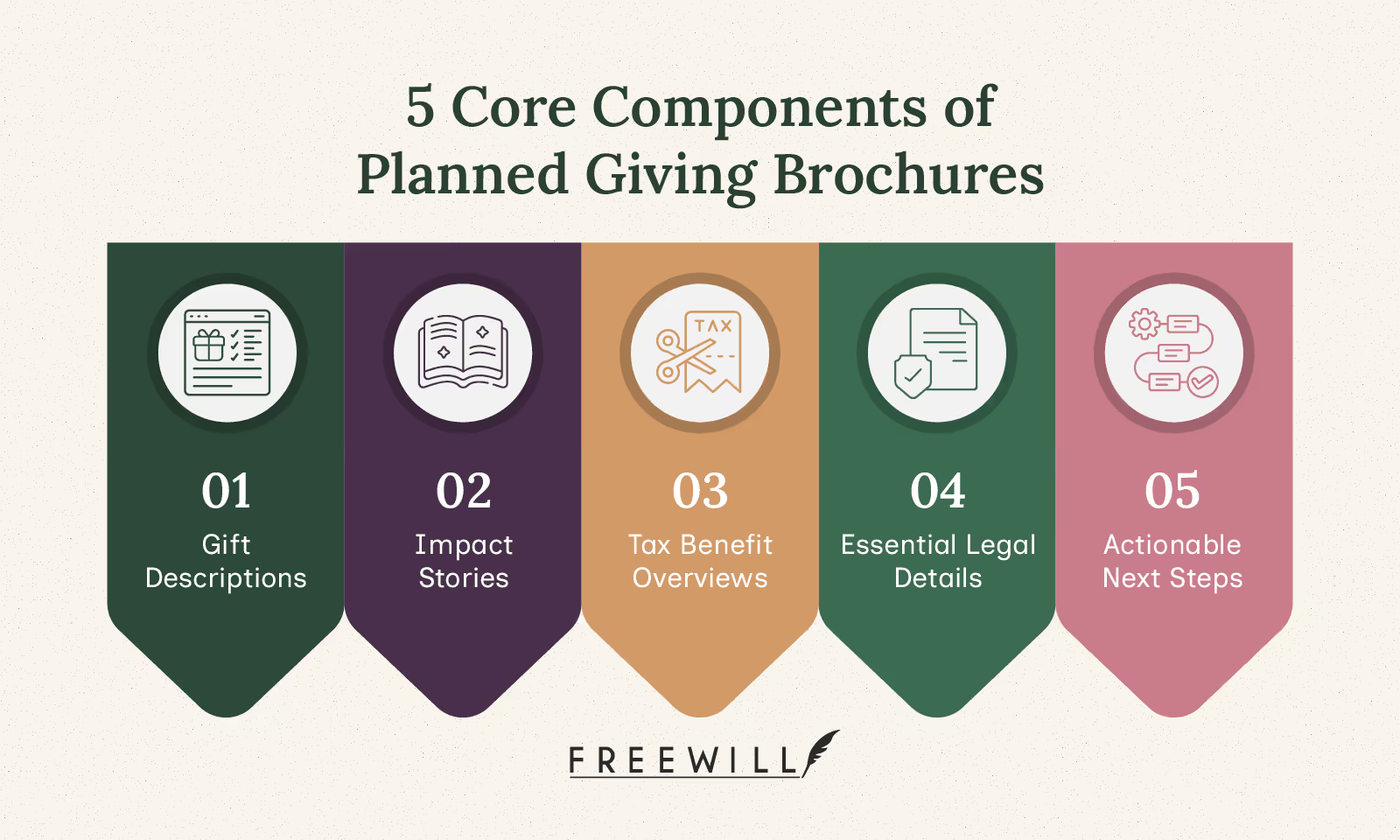
- Gift descriptions: Clear explanations of bequests, beneficiary designations, and non-cash assets.
- Impact stories: Real-world examples of what legacy gifts have helped your nonprofit accomplish.
- Tax benefit overviews: Simple language on how planned gifts provide financial security for the donor’s family.
- Essential legal details: Your organization’s full legal name and tax ID (EIN), along with a sentence of sample language for a donor's will.
- Actionable next steps: Direct links to online will-writing tools or contact info for your development team.
These resources can act as a bridge that moves the conversation from "I wish I could do more" to "I have a plan to help." By using accessible and approachable language, you can turn a complex financial decision into a simple act of generosity.
Why traditional planned giving brochures are evolving
As donor behavior shifts, traditional print materials lack the agility and reach needed to sustain legacy programs. Integrating digital resources into your nonprofit’s planned giving outreach is essential to increase visibility and stay flexible in a changing philanthropic landscape.
Some of the reasons planned giving outreach is shifting include:
Responding to demographic shifts
Young donors are thinking about their legacies much earlier than previous generations. In our 2025 study of planned giving trends, we found that 19% of Gen Z donors have already included a charitable bequest in their estate plans, which is the highest rate of any age group. These commitments are also growing in value. The average gift in 2025 was $42,679, showing a significant increase over the 2024 average of $34,798.
If you only target older generations with physical mailers, you miss the opportunity to engage this proactive group of supporters in your legacy program.
Capturing child-free wealth
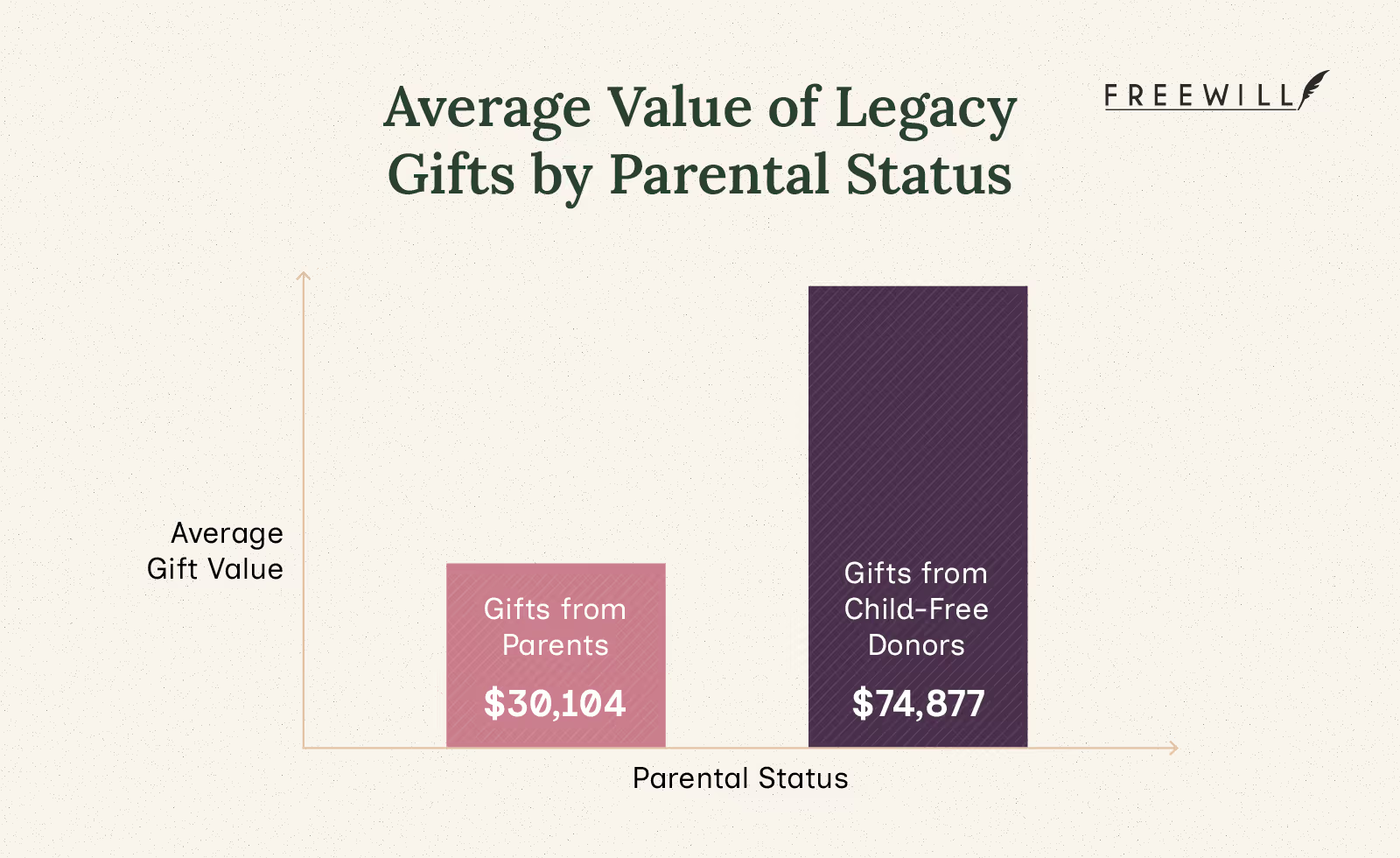
While 65% of all wills with bequests are created by parents, adults without children tend to be more generous with their legacy gifts. Contributions from adults without children account for 64% of total bequest value, and their gifts are, on average, 2.5 times higher than those of donors with children. This demographic is proven to give at higher rates and may also have greater financial flexibility, allowing them to leave larger gifts.
This is a valuable segment for your organization to engage with targeted outreach that supports long-term relationships. However, a static brochure may not address this group's unique giving motivations. For instance, they may be looking to cement a permanent connection with your organization through a bequest. In this case, dynamic messaging that reinforces how they will be remembered in your community would resonate the most.
Saving time and money
Traditional brochures can create friction that hinders donor momentum, such as the delay of waiting for mailers to arrive or confusion around legal jargon. Switching to digital tools replaces the high costs of printing and postage and allows organizations to reinvest the time and money that would otherwise be spent on these less effective methods.
Nonprofits are evolving by creating digital brochures or replacing them with dedicated microsites, saving thousands in administrative costs and providing real-time insights into donor behaviors.
How to build a planned giving microsite that drives conversions
A planned giving microsite or landing page acts as a dedicated home for your legacy program. Here, you can bring traditional brochure content to life with interactive elements and clear paths to action.
To design an educational, authoritative, and high-converting microsite, follow these best practices:
- Use simple definitions: Clearly outline gift options such as bequests and charitable gift annuities in plain language, not complicated jargon. For example, instead of "testamentary gift," just say "a gift in your will." This clarity builds donor confidence while positioning your organization as a friendly expert.
- Provide direct access: Trust often grows with a human connection. Provide contact information for your planned giving office so prospective donors can reach out to a real person with complex questions about their estates.
- Highlight your legacy society: If your program has an exclusive legacy society, show the unique value of joining the community. Outline the specific membership perks, like special events or resources they’ll have access to, and highlight the long-term impact of joining to foster a sense of belonging.
- Connect resources: Think of your website as the central hub for all planned giving marketing. If you use print mailers or digital brochures, leverage QR codes and URLs to link them directly to your site. This allows a donor to move from a physical postcard to a digital tool in seconds, without friction that could lead to abandonment.
- Implement action-oriented CTAs: Ensure CTA buttons tell the donor exactly what to do. Encourage immediate action by using high-impact phrases that state next steps like "Create your legacy!" or "Start your will!" rather than "Click here."
Strategies for modern planned giving marketing
Modern marketing prioritizes radical positivity. You want to encourage donors to take immediate action by communicating the joy of giving. Here are some strategies for promoting your planned giving program with thoughtful brochures.
Target the frugal saver
Many of your best legacy prospects may not consider themselves to be wealthy. Instead, they are simply lifelong supporters of your cause who have worked hard and saved consistently. Focus a significant portion of your outreach on these individuals.
Keep in mind that while they may possess significant assets, this audience might be intimidated by typical major gift language. Instead, use plain terms to show how their support becomes a permanent legacy. For example, rather than "We invite you to make a transformational philanthropic investment in our endowment’s principal fund,” you might say "You can ensure our work continues forever by leaving even a small percentage of your assets to our cause."
Prioritize coordinated messaging
Your message must stay consistent, whether it appears on your website or in a promotional email. If a donor gets an email about a legacy gift, the linked landing page should use the same stories and branding. This repetition builds recognition and trust, increasing the likelihood that the donor will commit to a planned gift.
Lead with impact-first messaging
Frame legacy giving as a chance for transformational impact, not just a tax-saving strategy. While tax benefits are important, they are rarely the primary reason someone gives. To highlight impact, consider:
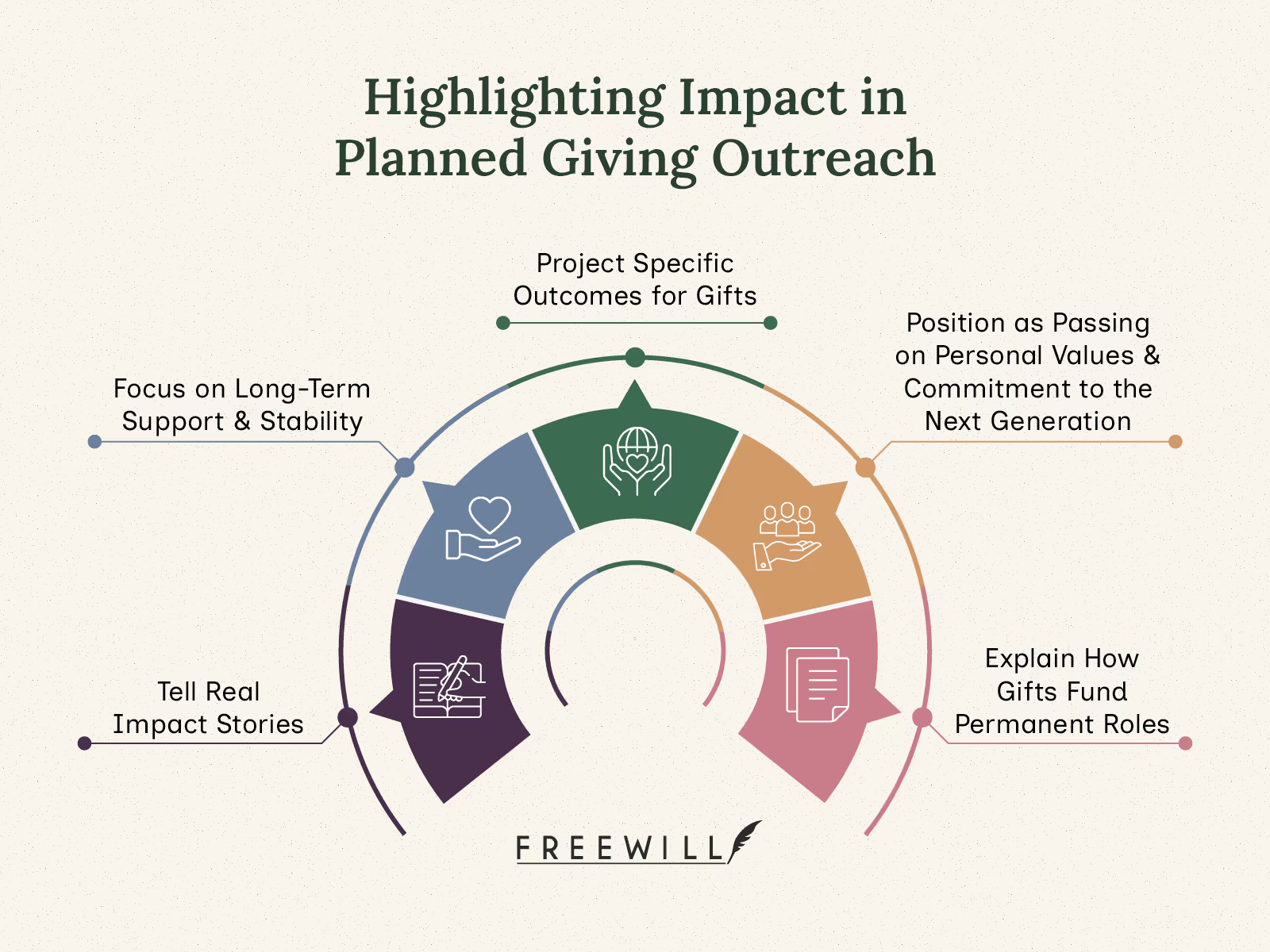
- Telling the stories of lives changed by previous bequests to connect donor values to your mission.
- Focusing on long-term support and stability.
- Projecting specific outcomes of the gift.
- Positioning the gift as a way for the donor to pass personal values and commitment to the cause to the next generation.
- Explaining how the gift might fund a specific role that provides extensive, long-term value to the organization.
Use milestone-based campaigns
Reach out to donors during key life moments or important organizational milestones. These occasions provide a natural reason to talk about the future. For example, a 30th anniversary campaign for your organization is a great time to ask long-term supporters to consider a legacy gift.
Planned giving outreach FAQ
What is the difference between major gifts and planned giving?
Major gifts are typically immediate, large-sum donations made from a donor's current income or assets, whereas planned giving involves larger commitments designated through estate plans. Planned gifts often allow donors to contribute more than they could during their lifetime.
While both of these donation types often yield generous gifts for your nonprofit, you’ll need to target distinct audiences and use different messaging for each.
How do digital brochures reach older donors?
While some older donors may prefer physical communications like direct mail, these generations are growing increasingly comfortable with technology. Providing a digital brochure or microsite allows them to act immediately when their motivation is highest. Additionally, these resources can complement physical mailers and support conversions by providing a fast, secure way to take action.
Does focusing on legacy gifts hurt my annual fund?
No. Data from a study conducted by Dr. Russell James, a Texas Tech professor, shows that donors who make a legacy commitment actually increase their annual support. The study found that average annual contributions increased by over 75%—from $4,210 to $7,381—once a donor finalized their planned gift.
When a supporter includes your nonprofit in their will, they become more invested in your long-term success. They aren't just giving a final gift, but are becoming permanent, lifelong stakeholders.
How can digital tools replace traditional planned giving brochures?
Digital tools help you overcome the friction of physical brochures with interactive features that allow donors to create wills and designate gifts online instantly. These tools use automated, gentle nudges to move donors through the estate planning process more efficiently than a paper brochure.
Scale your legacy program with FreeWill
FreeWill’s Planned Giving Suite provides an end-to-end platform for nonprofits to capture charitable bequests with minimal administrative overhead. By moving beyond traditional planned giving brochures, your organization can leverage automated tools that have already helped donors commit billions of dollars to high-impact missions.
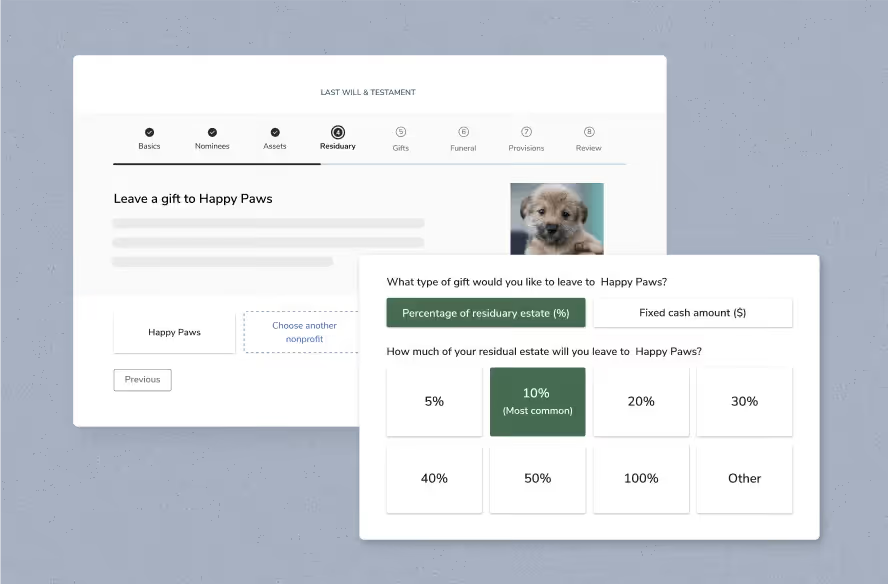
The suite offers a comprehensive set of features designed to grow your program:
- Legacy gifts and estate planning tools: Provide free, branded estate planning tools to your supporters, providing a powerful way to thank donors for their support. These tools also allow them to designate your organization as a beneficiary for their assets, simplifying a complex legal process into a few clicks.
- Marketing content and tools: Drive gifts through custom content and data-tested campaigns. Our Strategy and Content team can develop data-tested campaigns that solicit legacy gifts from your entire donor base. Research-driven prompts can gently encourage charitable giving as supporters define their legacy.
- Actionable insights: Receive real-time donor data and alerts, and track your campaign performance to get a complete picture of your planned giving program. This visibility allows your team to prioritize the most promising leads.
Additional resources
Modernizing your legacy program requires your nonprofit to move beyond paper brochures and embrace digital tools. This updated approach helps your organization effectively engage generous donors while simultaneously boosting your annual fund contributions.
Capturing your share of the $45.84 billion bequest market starts with providing donors with the accessible, interactive tools they need. To start transforming your legacy fundraising, schedule a demo of FreeWill’s Planned Giving Suite today.
To learn more about planned giving and grow your revenue, check out the following fundraising resources:
- DAFs 101: Introduction and how-to guide for nonprofits. Learn about DAF basics, key trends to know, and how to solicit them from donors.
- Nonprofit marketing 101: How to build a next-level strategy. Uncover how to build an effective marketing campaign and fit planned giving outreach into your strategy.
- How to accept stock donations: Easy steps for nonprofits. Understand stock donations and learn what you need to do in order to accept them.